How We Preview a Fight: The Five Questions We Ask Before Every Card
Style, range, pace, paths to victory and the judges. The five questions behind every Ringside Ledger preview, plus the template we fill in for each fight.
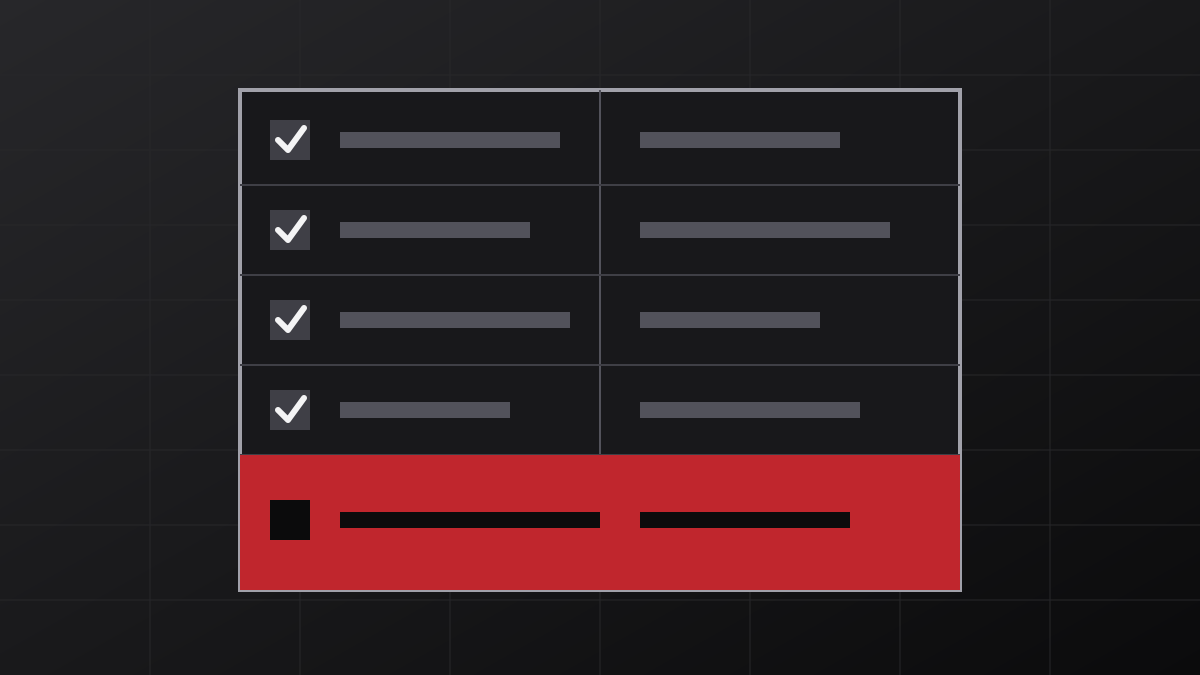
Every preview we publish starts the same way. A blank template. Five questions. Hours of tape.
No hunches. No hype. No rumours.
We do not pick winners because we like someone's walkout music. We pick them because the matchup tells us something. Here is exactly how we get there, so you can check our working, and argue with it.
Why we use a method
Fights are chaotic. One punch changes everything. Any preview can be wrong.
That is exactly why we use a method.
A method stops us falling for the obvious story. The bigger name. The louder press conference. The highlight reel that is three years old. It forces us to look at what each fighter actually does, round after round, and how that collides with what the other fighter does.
It also keeps us honest. When we get a pick wrong, we can go back to the template and see which question we misjudged. Was it range? Was it pace? Did we underrate how the judges would see it? That is how we get better.
And it keeps us respectful. Fighters spend months preparing for one night. They deserve analysis that takes their craft seriously, not a coin flip with adjectives.
Question 1: What is the style matchup?
Start here. Always.
Every fighter has a style. A home base they return to when things get hard. Pressure fighter (someone who walks forward and makes you fight on the back foot). Counter-puncher (someone who waits for you to commit, then makes you pay). Wrestler. Kickboxer. Jiu-jitsu specialist. Volume striker.
Styles are not labels. They are habits. We want to know what each fighter does when tired, when hurt, when behind on the cards.
Then we ask the key question: whose habits cause problems for the other?
Some classic collisions:
- Pressure against counter. Can the pressure fighter cut off the cage or ring? Or will they walk onto shots all night? We break this one down in pressure fighter vs counter-puncher.
- Wrestler against grappler. Who decides where the fight happens? More in wrestling vs jiu-jitsu in the cage.
- Striker against wrestler. Can the striker keep it standing long enough to land?
- Orthodox against southpaw. A right-handed stance against a left-handed one. Who wins the battle for the outside foot?
Styles make fights. It is an old saying because it is true.
Question 2: Where is the fight at its best for each?
Range is distance. And distance decides most fights.
Every fighter has a range where they are dangerous. And a range where they are lost.
- Long range. Jabs, teeps (a push kick to the body to create space), long kicks. Rangy fighters live here.
- Mid range. Hooks, crosses, combinations. Most exchanges happen here.
- Close range. Uppercuts, elbows, knees, the clinch (when fighters tie each other up at close quarters).
- On the ground. In MMA, a fourth range entirely.
We map each fighter. Where do they land most? Where do they get hit most? Where do they look uncomfortable?
Then we look for the overlap. If both fighters want the same range, it becomes a fight about who controls it. If they want different ranges, it becomes a fight about who gets their way first.
We watch footwork closely here. A fighter's feet tell you where they want to be long before their hands do.
Question 3: Can they hold the pace?
This is the question most previews skip. We do not.
Five-round fights are long. So are twelve-round boxing matches. A fighter who looks unbeatable for ten minutes can look very different after twenty.
We judge this only from what we can see on tape. Past fights. Past late rounds. That is it.
We do not speculate about anyone's health. We do not guess about training camps. We do not read anything into how someone looked at a weigh-in.
What we do look at:
- Output in late rounds. Do their numbers hold up in the final rounds of past fights?
- Recovery between rounds. Do they come out of the corner looking sharp?
- Defence when tired. Does their guard drop? Do they stop moving their head?
- Experience over the distance. Have they been past the halfway point before? How did it go?
A fighter who has never been to the later rounds is not necessarily weaker there. But they are an unknown. And we say so.
Question 4: What is each fighter's path to victory?
Now we flip the view. We stop asking "who is better?" and start asking "how does each one win?"
Every fighter has one. Even the heavy underdog. Especially the heavy underdog.
We write the path for each fighter in one or two sentences. If we cannot, we have not done enough work yet.
A good path is specific:
- Not "outstrike him." Instead: "Win the jab battle at long range, punish his lead leg, and stay off the fence."
- Not "take her down." Instead: "Close distance behind the overhand, wrestle against the fence, and ride out the final two minutes of every round."
Then we ask: how likely is each path? Which one needs fewer things to go right?
That is usually where our pick comes from. Not from who is the better athlete, but from whose path is shorter and easier to walk.
Question 5: How will the judges see it?
Most fights do not end early. So the scorecards matter.
And the scorecards do not always reward what fans think they will.
In boxing, judges score each round on the 10-point must system (the winner of a round gets 10, the loser 9 or fewer). Clean punches, effective aggression, ring generalship and defence all count. Our explainer on how a boxing round is actually scored goes deeper.
In MMA, judges look at effective striking and grappling first. Aggression and cage control only matter when that is even.
So we ask:
- Which fighter's work is more visible? Hard, clean shots are easy to score. Subtle feints and footwork are not.
- Who wins close rounds? A fighter who edges every tight round can win a fight without ever hurting anyone.
- Who finishes rounds strong? Late flurries stick in judges' minds, even though they should not.
- Does one style score better? Top control, for example, can be scored very differently by different judges.
Our pick is not just who wins the fight. It is who wins it on paper.
The template we fill in
Every fight on a card gets one of these. Main event or opener. Same treatment.
| Question | Fighter A | Fighter B |
|---|---|---|
| Home style | ||
| Best range | ||
| Worst range | ||
| Late-round output (from past fights) | ||
| Path to victory (one sentence) | ||
| What has to go right | ||
| How the judges see their work | ||
| Our lean |
We fill it in before we read anyone else's take. We fill it in from tape, official records and promotion-confirmed weights only.
Then we write the preview. The table is the skeleton. The words are the reasoning.
Sometimes the table surprises us. A fight we expected to be one-sided turns out to have a clear path for the underdog. A fight everyone calls a coin flip turns out to hinge on one range neither fighter talks about.
Those are our favourite previews to write.
What we will never do
A short list. It matters.
- We will never invent records, results or quotes. Every record and weight is checked against official commission and promotion sources.
- We will never speculate about a fighter's health. Not in a preview. Not anywhere.
- We will never dress up a guess as certainty. If a fight is close, we say it is close.
- We will never mix our card with the official cards. When we score a fight ourselves, it is labelled as our card. Always.
After the final bell
A preview is a prediction. Predictions can be wrong.
When we miss, we go back to the five questions. Style. Range. Pace. Paths. Judges. Usually one of them tells us exactly where we slipped.
That is the method. Five questions, one template, every fight.
Now you know how we think. Read the next preview with the template beside you. See if you agree.