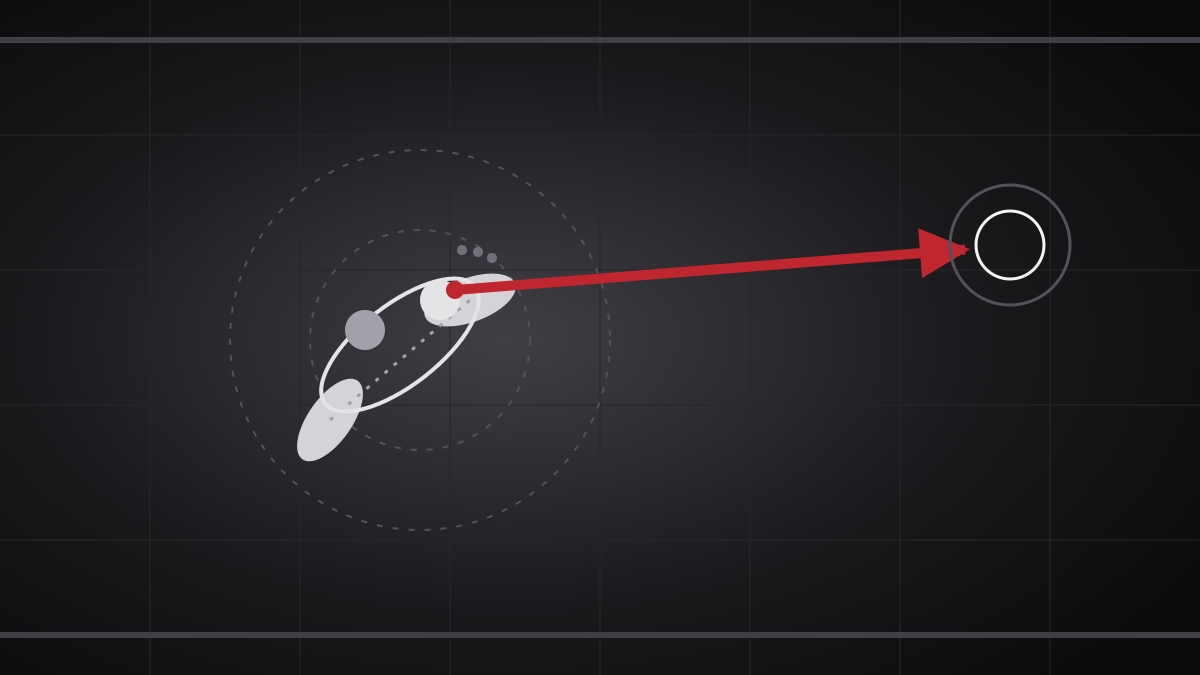
Orthodox vs Southpaw: The Battle for the Outside Foot
When an orthodox boxer meets a southpaw, the fight is often won by whoever keeps their lead foot outside. Here is why, and how each side fights for it.
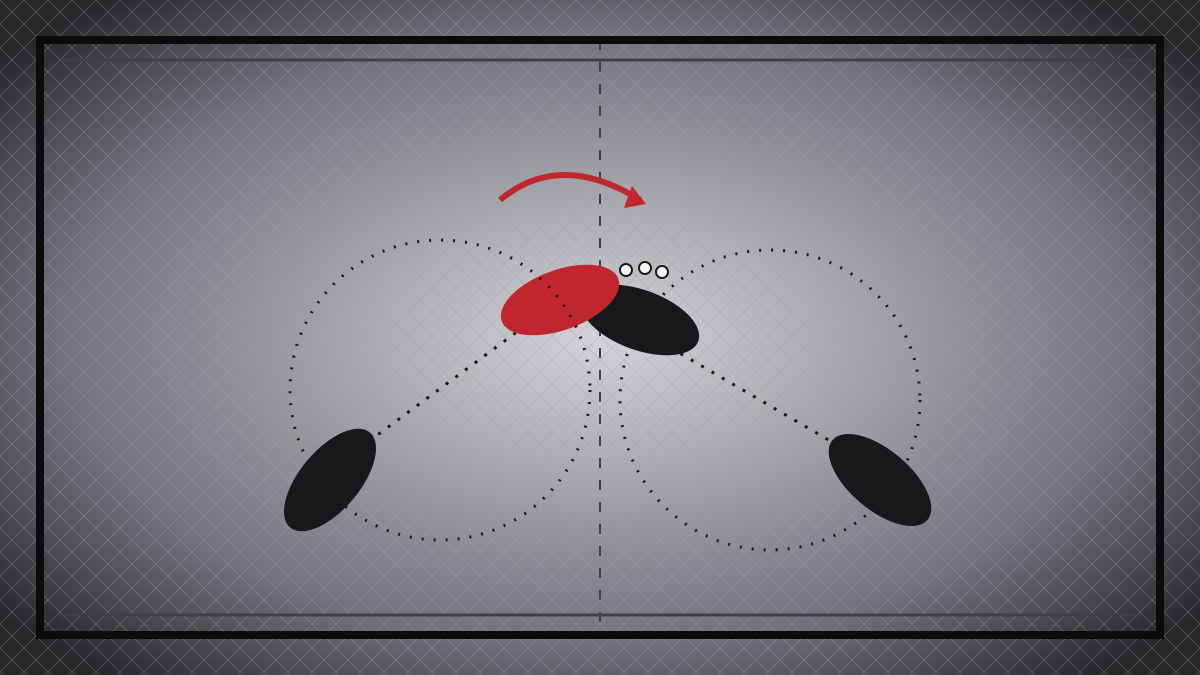
Look down, not up. When an orthodox boxer faces a southpaw, the most important battle in the ring is happening at ankle height. Two lead feet, pointing at each other, both trying to get to the same spot. Whoever gets there more often usually lands the cleaner punches, and usually wins the rounds.
This is the battle for the outside foot. It is one of the most important ideas in boxing technique, and once you see it you will not be able to stop seeing it.
Two stances, one problem
First, the terms.
An orthodox boxer stands with the left foot and left hand forward. Most right-handers fight this way, because it puts the stronger hand at the back, where it has the most distance to build up power.
A southpaw stands the other way round: right foot and right hand forward, left hand at the back. Most southpaws are left-handed, though some right-handers are taught to fight southpaw, and some fighters switch between the two.
When two orthodox fighters meet, their lead feet sit on opposite sides of each other's centre line. Their stances mirror. The jabs meet, the rear hands line up across the body, and the angles are familiar to both.
When orthodox meets southpaw, it is different. Their lead feet point at each other, more or less in the same lane. Their lead hands are on the same side, so the jabs tangle. And there is a race to get the lead foot on the outside of the opponent's lead foot.
What "outside foot" means
Picture both fighters from directly above. The orthodox fighter's lead foot is the left. The southpaw's lead foot is the right. Draw a line through each fighter from rear foot to lead foot. Those two lines cross somewhere between them.
The fighter whose lead foot is outside, further from the centre of the opponent's body than the opponent's lead foot, has the better angle. In plain terms:
- An orthodox boxer wants their left foot outside the southpaw's right foot. That lines up the orthodox fighter's right hand straight down the middle of the southpaw's guard.
- A southpaw wants their right foot outside the orthodox boxer's left foot. That lines up the southpaw's left hand straight down the middle of the orthodox guard.
The rear hand is the power hand. Getting the outside foot means getting a clear lane for the power hand, while the opponent's power hand is pointing slightly away, across their own body, at the space beside you.
Why it matters so much
Three things happen when a fighter wins the outside foot.
The straight rear hand opens up. The single most common big punch in open-stance fights, meaning orthodox versus southpaw, is the straight rear hand down the middle. With the outside foot, it travels in a straight line to the chin. Without it, it has to come around the opponent's lead shoulder.
The opponent's power hand is turned off. From the inside position, the rear hand has to cross further to land, and it is easier to see coming.
Movement gets easier. With the outside foot, stepping to that outside side takes the fighter away from the opponent's rear hand. The opponent has to turn to follow, and turning is when people get hit.
Here is a simple illustrative round, not a real fight, showing how the foot battle shapes a card:
| Minute | Fighter with outside foot | Fighter on the inside |
|---|---|---|
| 0:00–1:00 | Two clean straight rear hands | Jabs tangle, nothing lands clean |
| 1:00–2:00 | Steps outside, lands a rear hand and a hook | Lands one lead hook while turning |
| 2:00–3:00 | Controls the centre, scores a body shot | Pushes forward, mostly blocked |
| Our card | 10 | 9 |
Not every round goes this way, but this is the pattern we see again and again.
How the orthodox fighter wins it
The orthodox boxer is usually the one less used to this matchup, simply because southpaws are rarer. Southpaws spend their whole careers fighting orthodox opponents. Orthodox fighters may go long stretches without seeing a lefty. That is the famous southpaw advantage, and it is mostly about familiarity.
Here is how the orthodox side fights back:
- Step to the left. Moving to the orthodox boxer's left, the southpaw's right, takes them toward the outside and away from the southpaw's left hand.
- Lead with the right hand. In open stance, the right hand down the middle is often the first punch, not the second. It does not need a jab in front of it.
- Use the jab to the body or the shoulder. The head jab often clashes with the southpaw's jab. A jab to the chest, or pushing down on the southpaw's lead hand, clears the way.
- Plant the lead foot first. Literally beating the southpaw to the spot. Small, early steps before the punch, not big lunges.
How the southpaw wins it
The southpaw's job is the mirror image:
- Step to the right. Toward the orthodox fighter's left, outside their lead foot, away from their right hand.
- Straight left down the middle. The classic southpaw weapon, and the reason so many orthodox fighters struggle with lefties.
- Control the lead hand. Southpaws often hand-fight, which means pressing, tapping or pinning the opponent's lead glove, to blind them and keep the jab occupied.
- Right hook as the opponent steps. The southpaw's lead hook is perfectly placed to catch an orthodox fighter stepping to their own left. That is the punch that punishes the orthodox fighter for trying to win the foot.
That last point is the heart of the matchup. Stepping for the outside foot is never free. The other fighter's lead hook is waiting there.
The counter-war in the middle
Because both fighters want the same spot, open-stance fights often turn into a game of feints. A feint is a fake: a twitch of the shoulder, a half step, a dip, designed to draw a reaction without committing.
Each fighter feints to make the other move first. If the orthodox boxer reacts to a southpaw feint by stepping left, the southpaw can time the right hook. If the southpaw over-commits to the outside, the orthodox boxer's right hand is suddenly lined up.
It can look slow from the cheap seats. It is not. It is a chess match in which one wrong step gets you hit with the opponent's best punch. Expect accidental clashes of heads too, because the lead legs and lead shoulders are in the same lane. Referees watch these closely, and the official rules on accidental head clashes vary by commission, so we will not generalise beyond that.
The jab in open stance
The jab still matters here, but it changes. Because the lead hands are on the same side, a jab thrown straight down the line often lands on, or tangles with, the opponent's lead glove.
So the best open-stance jabbers adapt. They jab to the body. They jab at the opponent's lead hand to move it. They jab from slightly outside, after a half step. We break down the jab and its variations in more detail in our guide to the jab.
What to watch for
Next time you watch an orthodox-versus-southpaw fight, look at the feet for a full round. Ask:
- Whose lead foot is outside more often?
- Who is stepping first, and does the other fighter punish it?
- Is the rear hand landing straight down the middle?
- Is anyone switching stance to change the problem?
- Are the jabs tangling, and if so, who adapts first?
Score the round on clean punching as usual. Our explainer on how a boxing round is actually scored covers the criteria. But do not be surprised when the fighter who won the feet is the fighter who won the round.
Win the feet, win the fight
Open-stance boxing is not mysterious. It is a race for one patch of canvas. The fighter who gets their lead foot outside gets the straight lane for their power hand, and the other fighter has to work around them.
Watch the feet. The hands will follow.